

When Elon Musk first unveiled his “Secret Master Plan” nearly two decades ago, many dismissed his ambitions as fantasy. The idea of building a high-performance electric sports car, then using the proceeds to develop a mass-market affordable EV, was considered an impossible dream in an industry dominated by century-old automakers. Yet Tesla has already rewritten the history of transportation: from the Roadster to the Model S, from the affordable Model 3 to the global dominance of the Model Y.
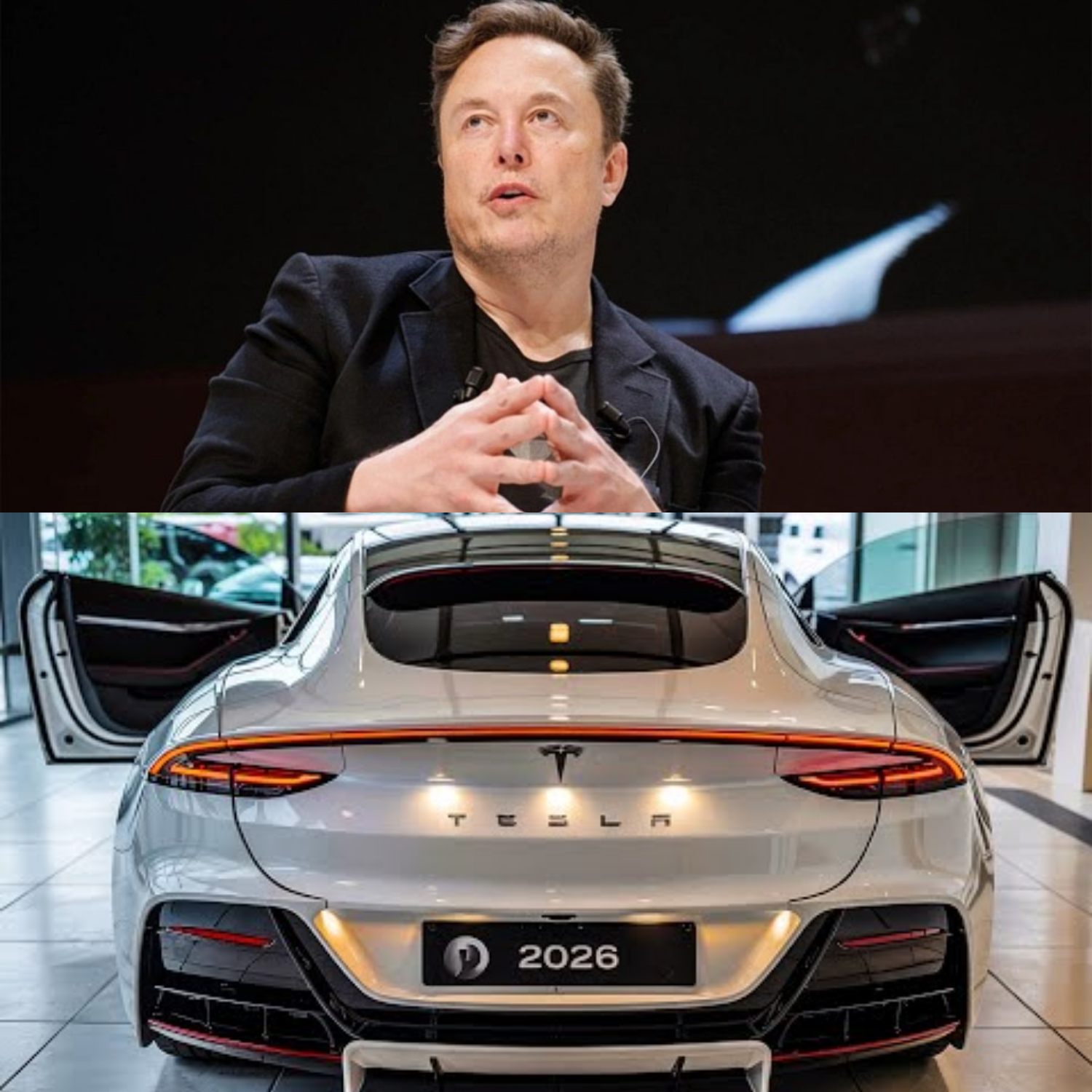
Now, the next chapter is upon us. Tesla’s upcoming Model 2, expected to launch in 2026, is poised to become the most transformative car in the company’s history. If successful, it won’t just be another Tesla -it could very well be the spark that triggers the global tipping point toward mainstream electric adoption. With a rumored price tag around $25,000, compact dimensions tailored for cities, and seven groundbreaking features, the Model 2 is shaping up to be Elon Musk’s boldest play yet a move that could send Tesla’s revenue soaring and permanently cement the company’s dominance in the EV era.

Advanced Autonomous Driving
Tesla’s leadership in autonomous driving is already well established through Autopilot and Full Self-Driving (FSD) software. But the Model 2 could represent the true democratization of autonomy. Imagine millions of drivers gaining access to advanced driver assistance at an affordable price point-technology that was once reserved for luxury vehicles now delivered to the masses.
More importantly, Elon Musk has consistently tied the Model 2 to his robotaxi vision. Musk has hinted that the next-generation platform will include versions without steering wheels or pedals, optimized for fully autonomous ride-hailing. If this comes to fruition, the Model 2 could double as a personal car and a revenue-generating robotaxi.
Sleek Compact Design
The Tesla Model 2 is expected to be smaller and more compact than the Model 3, making it the perfect vehicle for congested urban centers. With more than half the world’s population living in cities, the need for compact, efficient, and eco-friendly mobility has never been greater.
Using innovations such as gigacasting, Tesla can reduce parts and streamline production, resulting in a car that’s both affordable and robust.
Cutting-Edge Battery Technology
At the heart of the Model 2 lies Tesla’s 4680 battery cells, with structural pack integration. This means:
Longer range (250-300 miles / 400-480 km)
Lighter, stronger design
Lower production costs
For drivers, it means range anxiety finally ends. For Tesla, it means another leap ahead of competitors.
Innovative Interior Features
Tesla has always treated its cars like smartphones on wheels. Expect the Model 2 to feature:
Central touchscreen brain
Al voice control
Augmented reality HUD
Modular seats & eco-friendly interiors
And of course, Tesla’s signature over-the-air software updates ensure your Model 2 keeps evolving long after purchase.
Rapid Charging
The Model 2 will harness Tesla’s V4 Superchargers, delivering up to 350 kW. That means:
10% → 80% charge in under 20 minutes
Smart integration with renewable energy
Vehicle-to-grid (V2G) home backup potential
Fast charging = true freedom on the road.
Competitive Price Point
The shocker: $25,000 Tesla.
This puts Model 2 in direct competition with Toyota Corolla, Honda Civic, and VW Golf-only it’s electric, smarter, and future-ready.
Musk’s vision is clear: just as the Model T put America on wheels, the Model 2 will put the world on electric wheels.
Sustainability Enhancements
The Model 2 won’t just be affordable-it will be green at its core:
Recycled materials
Vegan leather interiors
“Unboxed” production process minimizing waste
Integration with clean energy sources
Each Model 2 replacing a gas car = tons of CO2 saved every year.
Beyond the Seven Features: Why It’s a True Game-Changer
Global reach: Perfect for markets like India, China, and Latin America.
Financial power: Millions of units per year = $100B+ annual revenue potential.
Mobility ecosystem: Works with Tesla Energy + Robotaxi network.
Cultural impact: Tesla ownership becomes mainstream, like owning an iPhone.
Challenges Ahead
Yes, risks exist: production delays, competition from China, regulatory hurdles. But if history is any guide, Musk thrives on “impossible.” From reusable rockets to global satellite internet to the world’s best-selling EV, he delivers.
Conclusion: Musk’s 2026 Game-Changer
The Tesla Model 2 is not just a car. It is Musk’s masterstroke-a $25,000, autonomous-ready, compact, sustainable EV for the masses.
It promises:
Advanced autonomy
Game-changing batteries
Ultra-fast charging
Unbeatable price
Mass electrification
If 2025 was about speculation, then 2026 will be the year Tesla changes everything.
Elon Musk’s greatest game-changer is coming-the Tesla Model 2.
Elon Musk says his next product will be the most important Tesla has ever produced. And he says it’s (finally) almost here
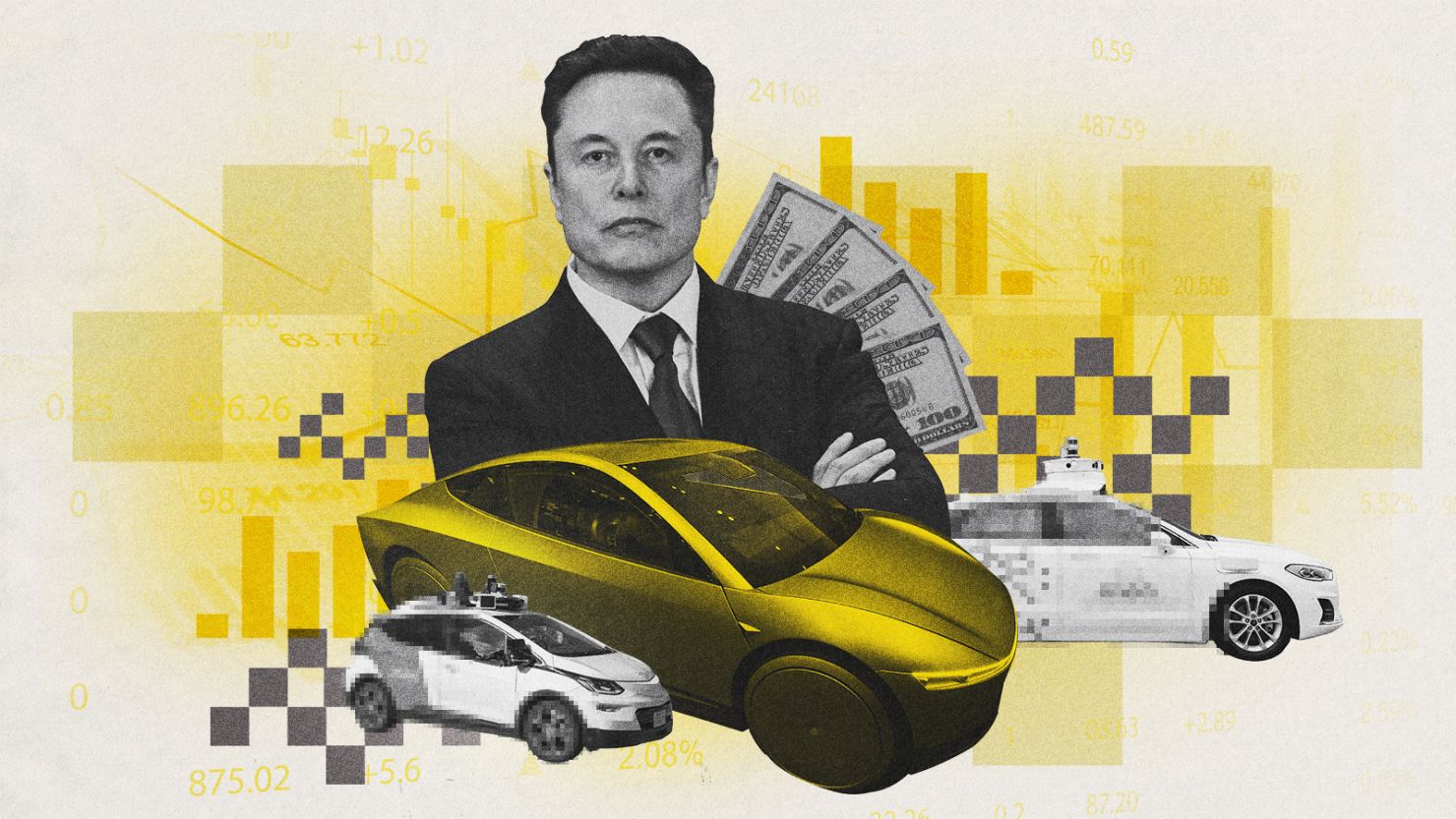
Photo Illustration by Alberto Mier/CNN/Smith Collection/Gado/Getty ImagesCNN —
Will Elon Musk finally make good on six years of robotaxi promises?
Musk said in a social media post this week that Tesla’s long-awaited robotaxi service will roll onto the streets of Austin, Texas on June 22. The Tesla CEO is betting the company’s future on autonomous vehicles (AV) and a robotaxi service – which will hopefully inject much-needed cash just as the company’s sales and profits are slumping.
While Musk is championing the promise of robotaxis – self-driving cars without a driver than can ferry around paying passengers – there are concerns about both safety and their viability as a business.
Traditional automakers like General Motors have already abandoned plans for a similar service despite spending billions, blaming the “considerable” resources needed and “an increasingly competitive robotaxi market.” Ford dropped its AV efforts altogether.
But even with their exit, some experts say the real competition for Tesla are the human drivers of Uber and Lyft.
“The challenge is less technological and more economic,” said Bryant Walker Smith, an affiliated scholar at the Center for Internet and Society at Stanford Law School, an expert in autonomous vehicles. “If a company that needs to pay engineers and mechanic and remote assistance has to compete with Uber drivers who might be making less than minimum wage to maintain their own older vehicle, that’s kind of hard to do.”
None of that has stopped Musk from making outsized projections about how the technology could reshape Tesla and the world.
“I don’t see anyone being able to compete with Tesla at present,” Musk said during April’s earning call about why he believes Tesla’s robotaxi service will succeed. “But at least as far as I’m aware, Tesla will have, I don’t know, 99% market share or something ridiculous.”
Robotaxis hit the streets
Musk cautioned in his social media post that the June 22 date was tentative. Whenever it does kick off, though, Tesla will be playing catch-up to far more established services.
“There are real robotaxis on the road today. None of them is a Tesla,” said Smith.
That includes Google’s Waymo, which is already providing 250,000 paid rides a week in four US cities – San Francisco, Los Angeles, Phoenix and Austin. Companies in China also have active robotaxi services.
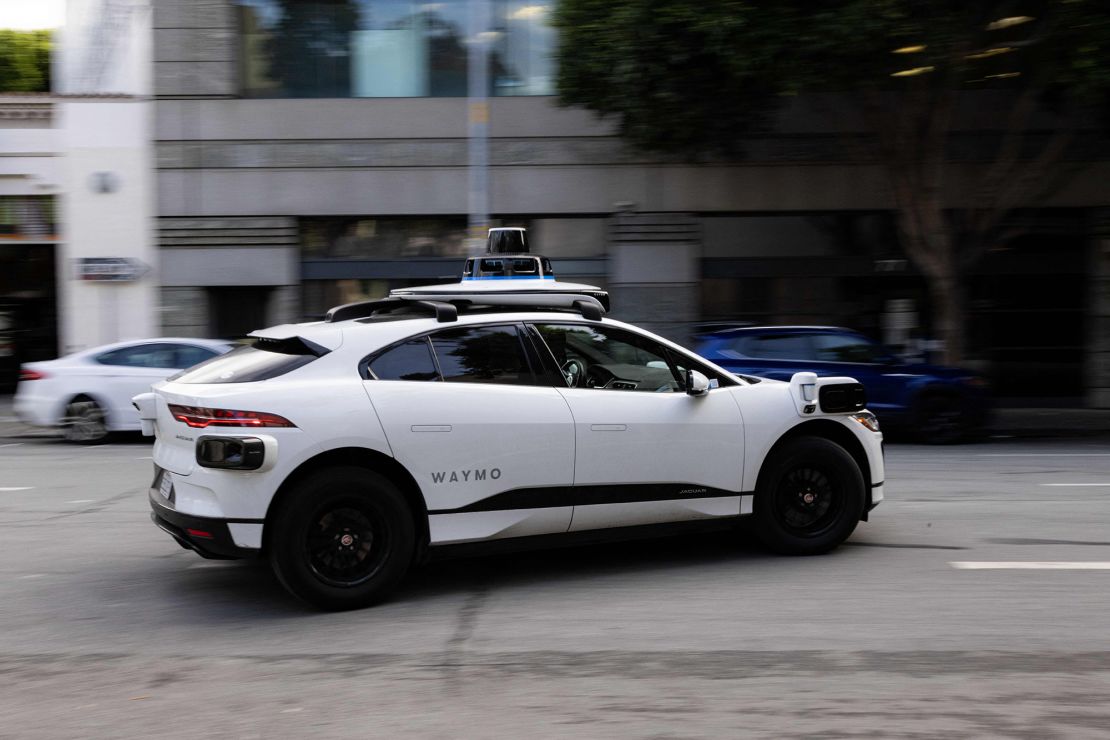
A Waymo autonomous vehicle turning onto Mission Street in San Francisco in November 2023. Jason Henry/AFP via Getty Images
Google parent Alphabet does not disclose the financial performance of its AV unit Waymo. But the segment of the company that includes Waymo reported a $4.1 billion loss last year, even as Alphabet poured in $5.6 billion.
That loss is little more than a rounding error for a company that reported net income of $100 billion. In contrast, Tesla last year reported net income of $7 billion, down 53% from 2023.
Waymo, which began as a paid service in 2020, is growing rapidly, with ridership up more than 50% in the last six months. Last month, it announced that its 1,500 vehicles had logged more than the 10 million paid rides – up from 5 million rides through the end of last year.
Uber – which has a partnership with Waymo in Austin – plans to expand the alliance into Atlanta next year. Uber CEO Dara Khosrowshahi told a Bloomberg technology forum last week that while he expects the company to rely on human drivers for years into the future, he sees a growing role for robotaxis.
“We want to help these players develop, by investing in them in some cases, and really by working with them to bring their product to market,” he said. “These are technologies that are unbelievably promising, but they’ve taken billions of dollars to develop. It’s one of those overnight success that has taken 20 years of development. But it’s finally ready to hit the market and we want to help that ecosystem get there.”
New tech, old worry
For years after automated elevators were invented, building owners paid to have human elevator operators because people were worried about riding in an elevator without one.
Robotaxis could face similar safety concerns, experts say.
Smith said he’s seen people grow comfortable with robotaxis after giving them a try, even though it’s too early to say whether the driverless cars are safer than ones with a person at the wheel.
“I often see… people are really nervous about it getting in a robotaxi. And then they get in, and within literally minutes, (they’re) on their phones, and they’re checked out, it’s normal,” he said.
Tesla’s current self-driving technology, known as “full self-driving” or FSD, uses just cameras, not radar or lasers known as “lidar,” to detect obstacles in front of them.
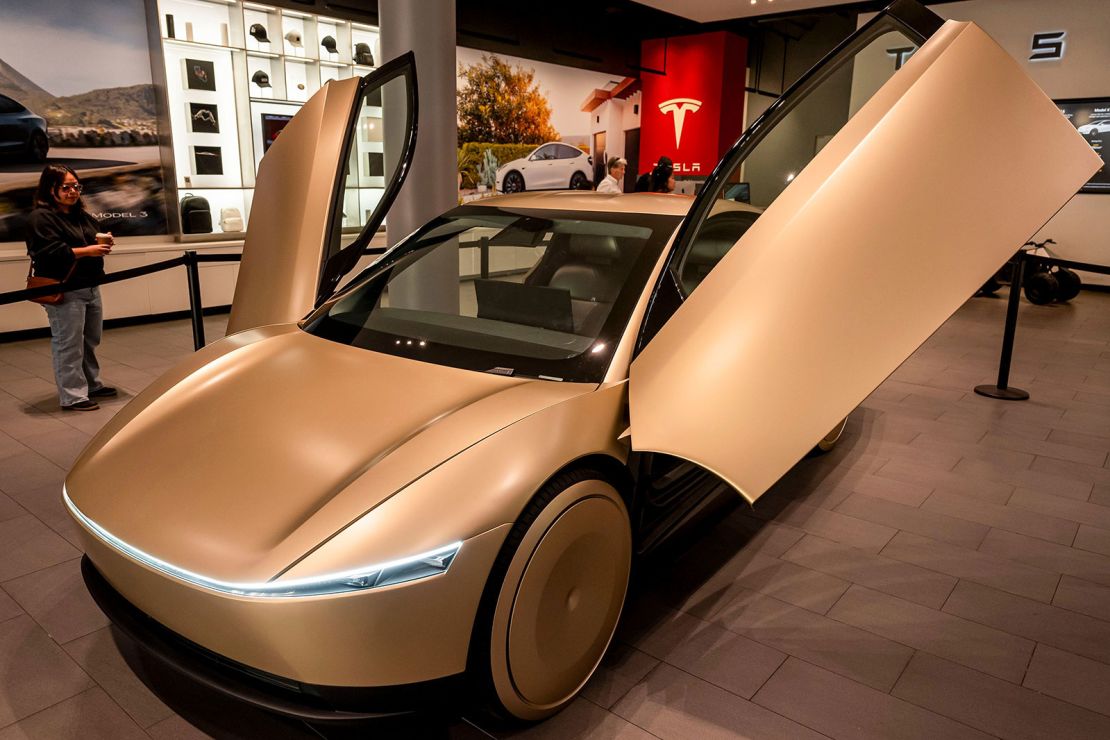
A Tesla Cybercab prototype. Tesla CEO Elon Musk said this version of the robotaxi, which has no steering wheel or pedals, will “probably” will go into production in 2026. The Tesla robotaxi service due to start later this month will use Model Y SUVs already on the market. David Paul Morris/Bloomberg/Getty Images/File
Musk has mocked the idea of lidar, which is used on Waymo and some other self-driving cars, writing on X in March, “People don’t shoot lasers out of their eyes to drive.
Just try Tesla self-driving today, which just uses cameras and AI, and you will understand.” He described lidar as “expensive sensors that are unnecessary” and “friggin stupid.”
While not using lidar gives Tesla robotaxis a cost advantage over Waymo, many experts consider lidar safer to detect obstacles – including people – in the road.
The National Highway Traffic Safety Administration has announced several investigations into the safety of Telsa’s FSD, including a fatal accident in which a car using the feature hit and killed a pedestrian.
The car using FSD “experienced a crash after entering an area of reduced roadway visibility…. from conditions such as sun glare, fog, or airborne dust,” said the agency’s statement about the probe.
Smith said that those real-world experiences show the problem with using just cameras for detection.
“If you could enable drivers to have lasers shooting out their eye to avoid sun glare and things, it would be a good thing,” he said.
Tesla needs a win
Tesla needs a turnaround. The company has experienced plunging sales and profits, including its first drop in annual sales last year and its biggest drop in quarterly sales, thanks in part to backlash against Musk’s political activities.
Tesla’s stock (TSLA), which hit a record high in mid-December on expectations that Musk’s close ties to President Donald Trump would lead to Tesla-friendly policies, have plunged 30% since then.
Musk and his fans on Wall Street are convinced that Tesla will soon explode in value due to its AV capabilities and future robotaxi service, largely because self-driving robotaxis can operate more hours in a day than human driver.
“I think this will be the largest asset value increase in human history,” Musk told investors in January.
Tesla did not respond to a request for comment.
Musk has repeatedly projected the service will change life on the planet by radically reordering how people move around, while Tesla owners rent out their cars for the robotaxi service to generate a cash return.
But the Tesla CEO has been promising that his robotaxi service was a year away since at least 2019, only to fall short of those ambitious targets.
GLJ Research analyst Gordon Johnson predicts Tesla’s robotaxi launch this month will be more flash than substance.
“This is a Tesla proof of concept exercise, not a rollout or a testing of a commercial asset for sale,” Johnson, a long-time critic of Tesla, wrote in a note to clients Tuesday.
And Smith doubts Musk will be able to live up to his current promises any better than the past ones.
“I don’t know why anyone refers to things he says with any measure of credulity,” said Smith. “When we’re talking about the future, it’s important to recognize that that future is not one that Tesla has demonstrated itself able to deliver.”