


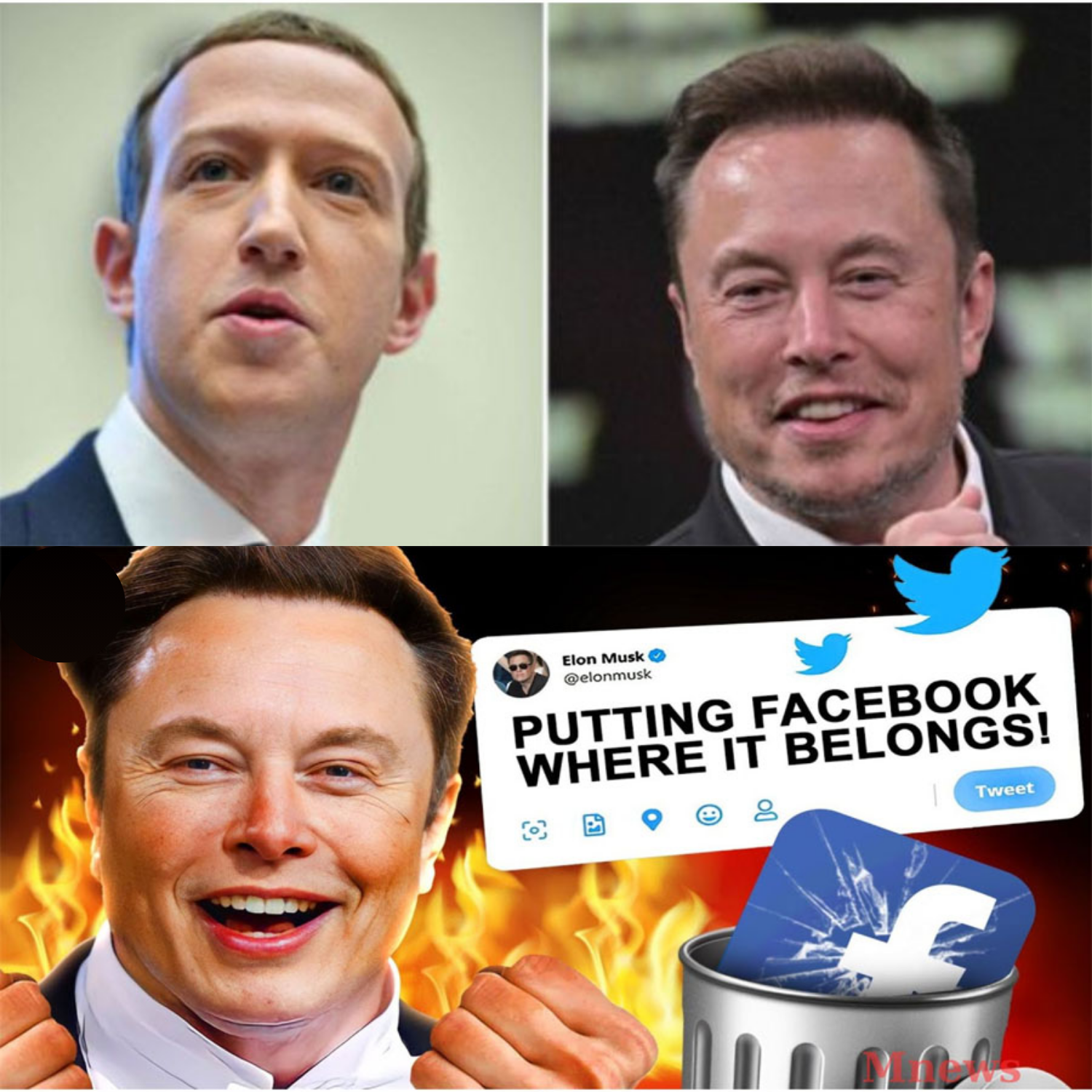
Elon Musk, the billionaire entrepreneur known for his bold business moves, is once again at the center of a viral rumor, this time suggesting he might buy Facebook and delete it. This speculation ignited after a misleading tweet circulated online, claiming Musk would take such drastic action following his recent acquisition of Twitter. However, there is no evidence that Musk ever made such a statement, and the tweet in question appears to be fabricated.
Musk’s history with social media is fraught with controversy and unpredictability. He has openly criticized Facebook in the past, labeling it “lame” and expressing disdain for its platform. In 2018, he deleted both Tesla and SpaceX’s Facebook pages, stating he had no use for the platform and did not want to be associated with it. His discontent with Facebook stands in stark contrast to his active engagement on Twitter, where he has amassed a significant following and often uses the platform to share his thoughts and updates.
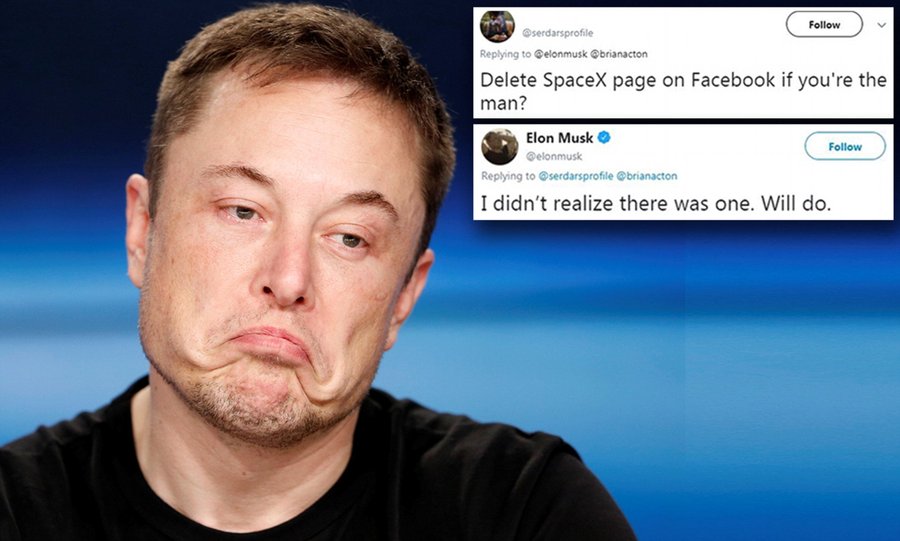
The recent rumors about Musk’s alleged intentions to purchase Facebook have sparked widespread speculation about the implications of such a move. While some supporters may view it as a potential effort to reshape social media, it is crucial to note that Musk himself has not confirmed any plans to acquire Facebook. Instead, the viral tweet appears to be a product of social media mischief, with no factual basis.
Musk’s acquisition of Twitter for $44 billion has already raised eyebrows regarding the future of the platform. He has positioned himself as a champion of free speech, emphasizing the need for an inclusive space for public discourse. However, the implications of one individual’s control over such a powerful communication tool remain a topic of concern. Critics argue that Musk’s ownership could exacerbate issues of misinformation and toxicity on social media.

The speculation surrounding Musk’s potential acquisition of Facebook highlights the fragile nature of information in the digital age. In an era where rumors can spread like wildfire, it is essential to scrutinize the sources and verify the facts before drawing conclusions. As of now, there is no credible evidence that Musk intends to buy or delete Facebook, and users can rest easy knowing their favorite social media platform is not facing imminent closure at his hands.
In summary, while Elon Musk’s name continues to dominate headlines, the latest rumors about him buying Facebook and deleting it are unfounded. The situation serves as a reminder of the importance of critical thinking and fact-checking in the age of social media, where misinformation can easily take root and spread. As the digital landscape evolves, so too does the need for responsible communication and engagement.
Donald Trump Just Proved He’s an Economic Idiot. Again.
His MAGA sycophants knew all along that his central economic proposal was a sham, but they repeated his lies. And now the economy is cracking.
Alex Wong/Getty Images
https://instaread.co/player?article=donald-trump-just-proved-hes-an-economic-idiot-again&publication=newrepublic&pay_wall=false&article_url=https%3A%2F%2Fnewrepublic.com%2Fpost%2F192464%2Fdonald-trump-tariffs-flip-flop-economic-idiot&version=1767144000000
Remember the word “sanewashing” from the 2024 presidential campaign? It referred to the mainstream media’s coverage of Donald Trump’s rallies, and their tendency to pluck out quotes for their stories that made him sound like a normal candidate when he was in fact spouting fantastical lies and gibberish and authoritarian threats. I was apoplectic about it, as were TNR’s Greg Sargent and contributor Parker Molloy.
The media sanewashed a lot of what Trump said, from his hate-filled rhetoric about transgender people to his descriptions of Kamala Harris. But in retrospect, his sanewashing on the economy probably benefited him more than anything else. The economy was voters’ top concern, and the common narrative in the press went like this: The economy’s terrible; inflation is punishing; voters blame Joe Biden, “fairly or not” (a classic dodge of a phrase); the Trump economy was strong until Covid, which wasn’t his fault, and Trump says he’ll bring down prices on day one and protect American workers with his tariffs.
Many of these claims weren’t true, and now we’re starting to see the consequences of the casual lies Trump got away with last year. How many times did we hear him say things like, “Tariff” is “the most beautiful word in the dictionary”? Everybody knew then what’s obvious today. Tariffs are taxes. They raise prices on Americans. A lot of people said it, mostly Democrats, but Trump denied it, and the right-wing media-political complex that exists to support his every lie cranked into gear to say tariffs are great.
That was then. Now we’ve moved from campaign rhetoric to policymaking, and what we’re seeing is even more obvious and embarrassing than I’d imagined. Tariffs were the centerpiece of Trump’s campaign—they were his most important proposal on the most important issue to voters. It doesn’t get more central than that.
And now we’re seeing that it’s a joke. Trump has twice now imposed sweeping tariffs and twice now withdrawn or delayed them almost immediately in the face of criticism and the plunging stock market.
Can you imagine if Harris had done that? If any Democrat had done that? If any other Republican had done that? Imagine that John McCain or Mitt Romney had run on some core economic promise and had won, and then once in office had put forward that core proposal but been hammered by the reaction and reversed course within 24 hours?
Their credibility would have been shot. They would have had their defenders, but even most Republicans at that point would have admitted that it was embarrassing. We’ve had a few Republicans criticize Trump’s tariffs, but most, as usual, are silent. Dear Leader can do no wrong.
And on the broader issue of economic performance, we keep hearing stuff like this:
Peter Navarro: “The economy is in good shape right now because the Trump cavalry is riding to the rescue,” but the “Biden inflation” remains a problem.
Newt Gingrich: “Just as Reagan inherited Carter’s bad economy, President Trump inherited Biden’s bad economy.”
Larry Kudlow: “Right now the economy is doing poorly. This is still the Biden economy.”
Stephen Moore: “These numbers that have come in so far are really the Biden numbers.… This is a bit of the Biden hangover.”
Some of this is just normal partisan swordplay, but where Trump is involved, there is always a sense of a particularly potent Kool-Aid being drunk by all those who go out there and parrot these obvious, blatant lies—who even cheer them.
I mention “cheer” with specific reference to Tuesday night’s address to Congress. It was filled with embarrassing moments, but the biggest laugher was when Trump pledged that “we are going to balance” the federal budget.
I’m glad I wasn’t sipping a bourbon, because I would have spit it out on the dog. A lot of Democrats laughed. But the Republicans, of course, cheered wildly.
Are they kidding? How many times do we have to go over this? In the last half-century of this country’s history—50 years is a long time now—these are the numbers. They’re so lopsided that most Americans wouldn’t even believe them:
• Jimmy Carter added $25 billion to the deficit.
• Ronald Reagan added $74 billion. That seemed bad at the time; just you wait.
• George H.W. Bush added $102 billion.
• Bill Clinton reduced the deficit by $383 billion, leaving the budget in surplus when he left office.
• George W. Bush added $1.54 trillion to the deficit.
• Barack Obama got the deficit down to $585 billion; that is, he reduced it by $825 billion.
• Donald Trump added $2.1 trillion to the deficit.
• Joe Biden reduced the deficit by about $942 billion.
See a pattern there? Under Republican presidents in the last half-century, the deficit has increased by a total of $3.8 trillion. Under Democrats, it’s gone down by $2.1 trillion.
It’s a joke. And it’s a crime that Americans don’t know this and still tell pollsters that Republicans are more responsible stewards of the economy. Shame on Democrats for failing to hammer these facts home.
Ronald Reagan left office with a healthy economy. But ever since—for 40 years—the pattern, the clear and obvious pattern, is this: Republican presidents wreck the economy, and Democratic presidents clean up the mess. This is inarguable.
Fine, put an asterisk by Trump because of the pandemic. But the numbers are the numbers. If Hillary Clinton had been president during that economic collapse, do you think Republicans would have been thoughtful enough to say, “Well, in fairness to President Clinton …”
The same thing is likely to happen again, by the way, and on an even grander scale. Trump wants to cut nearly $7 trillion in taxes. Congressional Republicans want to cut domestic spending by $4.5 trillion. Even a Fox News host could do that math, if he wanted to. It equals a massive budget deficit, to say nothing of the pain about to be felt by people—the people Trump professes to love—with cuts to Medicaid and other programs that, as more and more people are learning, actually do some good things.
Can Donald Trump do that math? I doubt it. He’s an economic idiot. Always has been. He ran a good economy? No, he inherited Obama’s economy. If you compare Obama’s last three years as president (taking out a Great Recession that began before he took office) to Trump’s first three (taking out a pandemic-related collapse because the pandemic wasn’t his fault), Obama created around 43,000 more jobs per month than Trump.
These are indelible facts. As is the fact that tariffs are taxes. American consumers will pay them, as will farmers and importers, if Trump ever gets around to imposing them for real. If he keeps “imposing” tariffs and then backing off, well, it will be better for the economy than if he leaves them in place. But Democrats and our free press had better make sure that the public understands that the candidate who supposedly was “in touch” with the working class built his campaign around a proposal that’s about as real as spinning straw into gold. The sanewashing must not continue.
This article first appeared in Fighting Words, a weekly TNR newsletter authored by editor Michael Tomasky. Sign up here.